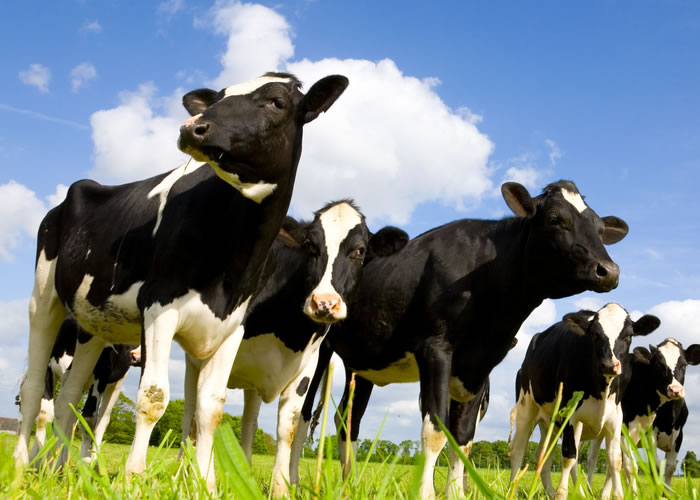

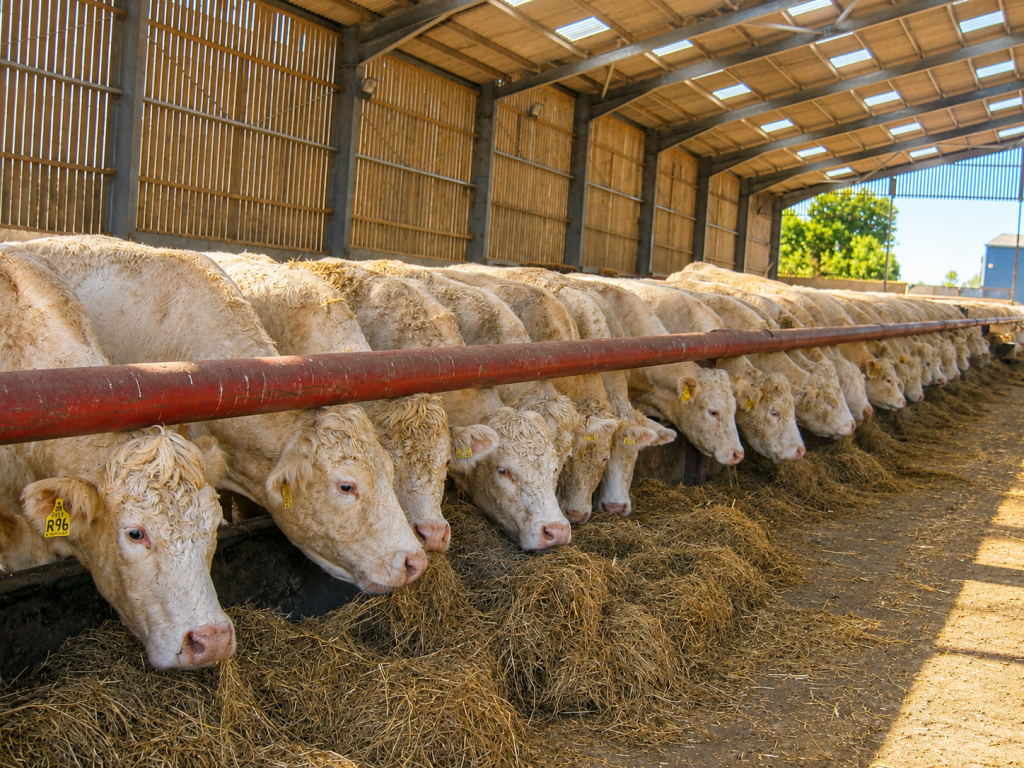
The prolonged dry spell and hot weather in the UK creates two connected challenges for farmers: cattle may eat less, while parched and stalled grass growth leaves less nutritious forage available when they do graze.
Reviewing forage supplies and the basal ration now can help maintain rumen function, protect feed efficiency and cattle performance before it impacts liveweight gain, fertility or performance.
Need support reviewing your cattle mineral and live yeast requirements?
Speak to the Scotmin Nutrition team.
In this article you’ll learn
- Why hot weather and reduced grass growth can affect cattle performance
- What to review in the basal ration before adding supplements
- How live yeast supports the rumen function and forage-digesting bacteria
- Where Biosprint fits into a hot-weather feeding plan
- How and when to feed Biosprint Mineral
Why hot weather creates a cattle nutrition challenge
Dr Richard Wynn, head of research and development at Fevara, explains that heat stress can change when cattle graze, how active they are and how much they eat.
“Livestock become less active, seek out shaded areas and alter their grazing patterns, often eating less at the very point their bodies are under more strain.”
AHDB’s Forage for Knowledge data put average grass growth at 28.8kg DM/ha/day on 24 July 2026, compared with 35.9kg at the same time last year and a 2019–2024 average of 50.2kg.
Heat and dry soils have stopped growth in some areas, while scattered showers are unlikely to make much difference. Even after sustained rain returns, swards may need several weeks to recover, leaving many farms reliant on additional forage and supplementary feed.
Potential effects include “With intakes reduced, grass lacking and grazing no longer doing the job it was a few weeks ago, this can quickly affect milk yield, liveweight gain, fertility, health and overall performance,” says Dr Wynn.
These effects may not be immediately visible and can extend beyond the initial period of high temperatures. In dairy systems in particular, heat stress can affect both dry cows and unborn calves, making it important to review forage provision and the ration before performance starts to slip.
Read our guidance on heat stress in dry cows and unborn calves.
Review forage and the basal ration first
According to Dr Wynn, the starting point is not simply to add another product. It is to establish what the existing ration is providing first and what declining pasture is no longer supplying.
Farmers short of grass may consider housing cattle where building capacity and ventilation allow. Where this is not practical, stock will remain outside.
In either case, additional forage, most likely silage, may be needed. This draws on winter stocks earlier than planned, so Dr Wynn advises using the best-quality forage available because digestion itself generates heat within the rumen.
“The rumen generates a huge amount of internal heat during digestion and, when animals are already hot, that can contribute to lower intakes. By feeding good-quality silage, the likelihood of this is minimised, allowing them to retain more from what they eat.”
Before deciding how to supplement the ration, review:
- Forage availability: Is there enough grass or conserved forage to meet expected intake?
- Forage quality: Is the silage or alternative forage sufficiently digestible and nutrient-dense?
- Water access: Are there enough clean, reliable watering points available?
- Feeding behaviour: Are cattle grazing or eating at different times of day?
- Ration changes: Has silage, cereal or another feed been introduced earlier than usual?
- Mineral provision: Does the ration remain properly balanced as the base forage changes?
Shade, good ventilation and unrestricted access to clean water are crucial for managing livestock welfare and productivity in hot weather. Nutrition should support these practical measures.
Why rumen function is important during hot weather
The rumen depends on a large population of microbes to break down forage and release nutrients that the animal can use.
During prolonged dry and hot conditions, more irregular feeding patterns and changes to the ration can make it harder for cattle to maintain a consistent rumen environment. If they reduce their intake, they may also consume less energy, protein, minerals and vitamins.
Once the basal ration is right, targeted support may include rumen buffers, protected fats, live yeast or free-access mineral licks. Dr Wynn explains:
“Live yeast can help stabilise the rumen environment, support the microbes responsible for breaking down fibre and improve forage digestion. That can help animals make better use of the feed available.”
While live yeast does not directly cool the animal or prevent heat stress, it supports intake, energy supply and rumen function, helping cattle use available feed and forage efficiently.
Live yeast may be particularly relevant where:
- Grass growth and quality have declined
- Conserved forage is being introduced unexpectedly
- Cattle are moving from grazing to housed feeding
- Intake is less consistent
- Cereal levels or the composition of the ration have changed
- Farmers need to make the best possible use of limited forage stocks
How Biosprint live yeast supports the rumen
Biosprint is a specific active dry live yeast used by Scotmin in cattle nutrition.
It contains the strain Saccharomyces cerevisiae BCCM™/MUCL 39885.
Biosprint supports feed efficiency and animal performance by stimulating appetite, reducing the risk of feed-related digestive upsets and helping the rumen work effectively.
Within the rumen, Biosprint is intended to:
- Supporting appetite and feed intake
- Maintain an effective rumen environment and pH
- Stimulate bacteria responsible for digesting forage
- Increase nutrient supply
- Support microbial protein production
By supporting the bacteria responsible for breaking down fibre, Biosprint can help cattle extract more value from available forage, particularly when hot weather disrupts intake or forces an unplanned ration change.
It should form part of a wider feeding plan alongside an adequate basal ration, clean water, shade and suitable ventilation.
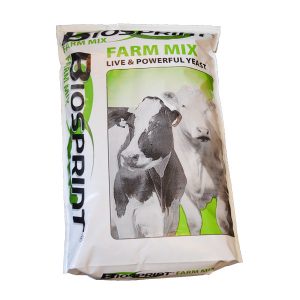
Where Biosprint fits
Biosprint is Scotmin Nutrition’s best-selling farm mix. It is specifically formulated to combine mineral supplementation and live yeast in one product to support rumen function and feed efficiency as part of a balanced ration.
It can be:
- Offered free access
- Mixed with cereals
- Incorporated into a TMR
Suitable across suckler, store, rearing and finishing systems, it can complement the basal ration during hot, dry weather by supporting appetite, forage digestion and mineral supply while reducing the risk of feed-related digestive upset, such as acidosis and bloat when diets change.
Feeding guidance
Biosprint is supplied in 25kg bags.
Dairy
- Improves milk yield by up to 2 litres per day
- Increases milk protein
- Offsets the cost of high wheat and cake prices
- 50g head/day
Beef
- Up to 10% increase in DLWG
- Improved carcass conformation
- Reduced risk of feed related acidosis
- 30g head/day
Act now to protect herd performance and farm profitability.
Speak to our nutrition team.