
Colostrum is one of the biggest ‘make or break’ factors in early lamb performance, and with production beginning in late pregnancy, what happens in the run-up to lambing has a direct impact on lamb vigour and early immunity.
That’s why many sheep farmers search for practical, high-intake pre-lambing buckets that help support ewe energy and colostrum quality in those final weeks.
Case study – JA Baskerville & Sons
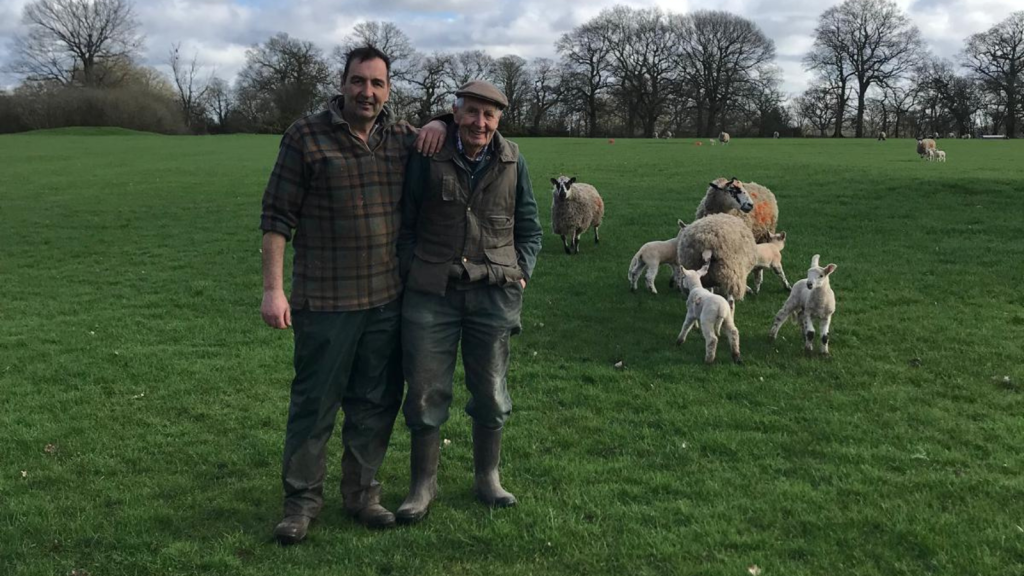
Warwickshire farmer David Baskerville of JA Baskerville & Sons runs 1,250 North Country Mule ewes across 500 acres of permanent pasture.
“Before I left school, we farmed a bit of everything — dairy, sheep, arable, beef cattle, and a few acres of potatoes. But nowadays, you’ve got to specialise,” he says.
“I decided to focus on sheep and upped our numbers of North Country Mules as they work well on our land.”
He lambs in four blocks with the first lambs typically being sold by mid-May.
“We run around 50 tups: Texels, Charolais, and Suffolks; some are crosses,” David explains.
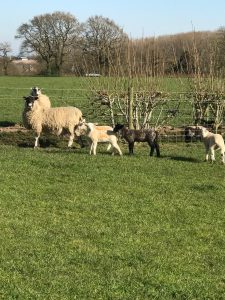
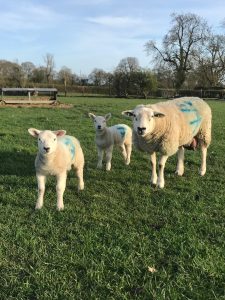
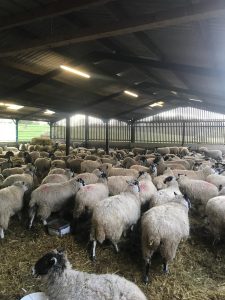
“We’ve finished lambing the first batch of 300 early ewes from mid-February. We’ll be lambing the main bulk in March and early April, with around 1,000 ewes to lamb over the next 3 to 4 weeks.
“Last year, I had 1,000 lambs off by June. Most of them go to Farmers Fresh.”
Supplementation is only part of the system, though, and David believes pasture and soil management is crucial.
“If you don’t look after your ground, you’re not going to get the best out of it,” he says. “You can’t expect ewes to get what they need if it’s not there in the first place.”
Feeding, minerals, and getting ewes primed
David’s approach combines management, grazing, and supplementation, with a strong focus on ewe condition ahead of tupping and lambing.
He says: “We use copper to help with fertility and get the ewes back in condition before tups go in.
“Our ground is low in copper, so the supplementation really helps boost fertility, particularly when there’s not much grass around, and we’ll bolus some of the poorer ewes too.”
Why MegaStart Ewe & Lamb?
MegaStart Ewe & Lamb is a high intake, free-access feed tub designed for use in the 4–6 weeks prior to lambing, supplying energy and nutrients to match late-pregnancy demand.
It includes:
- High energy sources from sugars, starch, and protected fat
- Quality rumen bypass protein to help meet late pregnancy demand
- A balanced supply of minerals and vitamins, including Vitamin E (for lamb vigour) and Vitamin B1 (to reduce problems with CCN)
- Mannan oligosaccharides (MOS) to support immunity and help improve colostrum quality
- Lactose included as a readily available carbohydrate source
For David, the benefits of using MegaStart buckets in his flock pay out dividends.
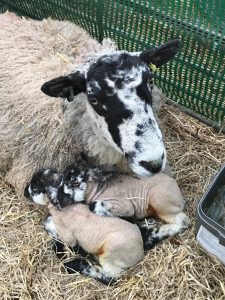
“I’ve been using MegaStart for years – I find it helps with colostrum production and it’s especially crucial for ewes carrying twins and triplets,” he says.
“It costs me money but pays in the long run. Our scanning rates are consistently strong, with our first batch of 300 ewes scanned at 216% – we know we’ll have 150 doubles and 103 triplets.
“It’s important ewes are able to feed their offspring, and I’m keen to do all I can to minimise twin lamb disease.”
David adds, “This year’s scanning was a bit higher than last year, helped by how I fed them when there was no grass to maintain their condition. The highest was 217% and the lowest was 206%, so that’s quite a high average.”
Additional supplementation
Once ewes are outside, David introduces Scotmin ProPlus buckets to support magnesium levels.
ProPlus Mag is a protein and energy lick containing multiple magnesium sources, which helps balance low protein diets and highly fermentable grass-based diets, through its range of carefully balanced vitamins, minerals and trace elements.
Key features include:
- Four sources of magnesium, two slow releasing and two fast releasing, providing the ultimate protection against staggers
- Targeted supplement of protein
- Suitable for mixed grazing
The bottom line
Thanks to his effective strategy combining grazing management with supplementation, David has built a resilient system that prioritises outputs and consistency – a necessity when margins are tight and every lamb counts, he says.
“If I hadn’t fed them the way I did, my lambing percentages would have been a lot lower. I’d rather have more lambs than not enough,” he concludes.
For practical background on colostrum and late-pregnancy feeding, take a look at our articles: Nutrition pre-lambing for lambing success or Give lambs the best possible start in life
Want help choosing the most effective supplementation for your needs? Get in touch with our team.
A simple pre-lambing checklist
- Body condition score ewes around 8 weeks pre-lambing and group by litter size and condition.
- Analyse forage and balance energy and protein for late pregnancy demand.
- Put a plan in place for twins and triplets early.
- Consider a dedicated pre-lambing bucket in the final 4 to 6 weeks, when colostrum is being made and demand is peaking.
- Keep minerals in mind, particularly Vitamin E and selenium, to support immunity and reduce deficiency risks.